
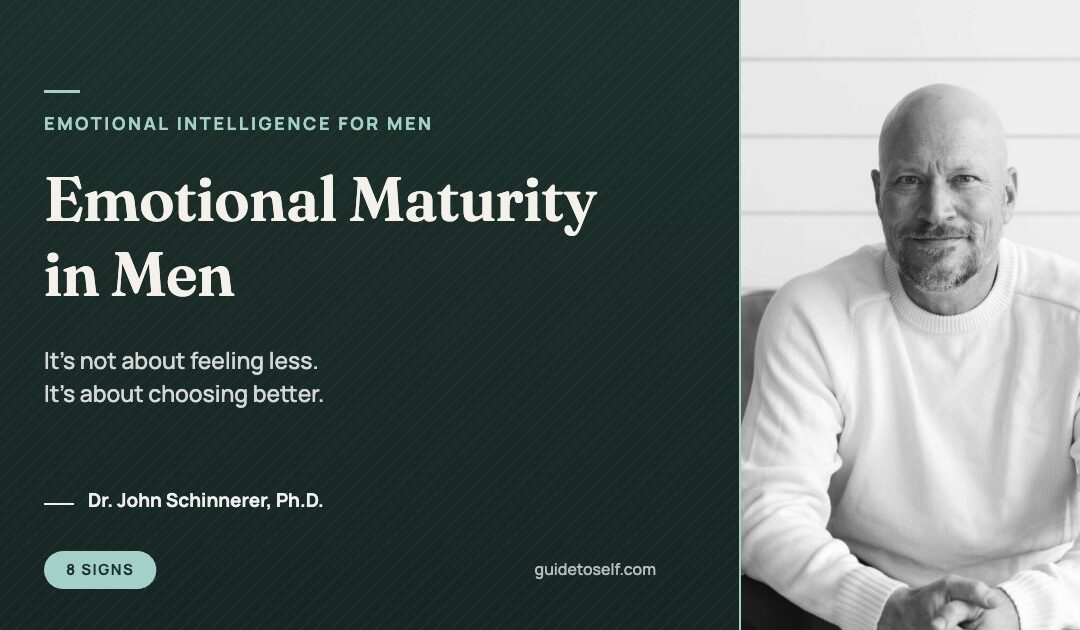
Short answer: Emotional maturity is the ability to feel strong emotions without letting them run the show. An emotionally mature man notices what he is feeling, takes responsibility for how he acts on it, and can stay steady and honest even when he is angry, hurt, or afraid. It is not about feeling less. It is about choosing better.
Most of us were taught that a mature man is a calm man. Stoic. Unflappable. Never rattled. That is not emotional maturity. That is often just good suppression, and suppression has a way of leaking out sideways: at your kids, in traffic, at 2 a.m. when you cannot sleep.
Real emotional maturity is quieter and harder. It is what lets you hear criticism without counterattacking, apologize without groveling, set a boundary without punishing anyone, and sit with a hard feeling long enough to decide what to do with it.
What Is Emotional Maturity? (Definition)
Emotional maturity is the capacity to recognize, tolerate, and responsibly act on your emotions, especially under stress. It shows up less in how you feel and more in what you do next: whether you react on autopilot or respond on purpose.
In the Inner Kingdom model I use with clients, emotional maturity is simple to picture: the King stays on the throne. Your Knight, the part of you built to protect, will still draw his sword when something stings. Emotional maturity is the King noticing that, holding court, and deciding whether this fight is actually worth having.
Emotional Maturity vs. Emotional Intelligence
They overlap, but they are not the same thing. Emotional intelligence is the skill set: reading emotions in yourself and others, naming them precisely, understanding what drives them. Emotional maturity is what you do with those skills when it counts. Plenty of smart, perceptive men can read a room perfectly and still blow up at home. Maturity is the follow-through.
8 Signs of Emotional Maturity in Men
1. He takes responsibility without collapsing
When he gets it wrong, he says so. “That was on me.” No five-paragraph defense, no shame spiral either. He owns the impact and moves toward repair.
2. He can feel angry without acting angry
Anger shows up. He notices it in his jaw, his chest, his tone, and he creates a pause before he speaks. He knows why small things set him off, so he is not surprised by himself.
3. He hears criticism as information, not an attack
He can listen to feedback, even clumsy feedback, without immediately proving why it is wrong. He may disagree later. First he understands.
4. He names what he feels
Not just “fine” or “stressed.” Disappointed. Embarrassed. Lonely. Worried about money. Precise naming is what makes a feeling workable.
5. He sets boundaries instead of punishing people
When someone crosses a line, he says so clearly and changes what he allows. He does not sulk, stonewall, or make them pay.
6. He tolerates discomfort long enough to stay in the conversation
He does not need every hard conversation to end in the next five minutes. He can stay in the room, stay curious, and come back to it if needed.
7. He lets other people have their feelings
His wife can be upset without it being a referendum on him. His kid can be sad without him rushing to fix it. He does not take every emotion in the room as an emergency he has to manage.
8. He acts from his values, not his mood
On a bad day, he still shows up the way he decided he wants to show up. Mood is weather. Values are the compass.
Signs of Emotional Immaturity (and Why They Are So Common)
Blaming. Sulking. Winning the argument and losing the relationship. Going silent for two days. Needing everyone else to calm down so you can feel okay. These are not character flaws. For most men they are learned strategies, the ones that kept us safe when we were younger and were never updated. That is good news, because learned strategies can be relearned.
How to Become More Emotionally Mature
- Catch the gap. Start noticing the half-second between the trigger and your reaction. You do not need to fix anything yet. Just notice.
- Calm your body first. You cannot reason your way out of a flooded nervous system. A slow exhale, a short walk, or a five-minute break comes before the conversation. Here are eight practical ways to regulate your nervous system.
- Name it in one word. “Hurt.” “Ashamed.” “Scared.” Say it to yourself before you say anything to anyone else.
- Repair fast. When you miss, go back within a day. Short and specific beats long and perfect.
- Get honest feedback. Ask someone you trust: “When do I get hardest to be around?” Then listen without defending.
None of this happens in a weekend. Emotional maturity is built the same way strength is built: reps, recovery, and more reps.
Want Help Building It?
This is the core of the work I do with men in emotional intelligence coaching. If anger is the thing that keeps undoing your progress, start with anger management coaching for men or the self-paced online anger management course.
Frequently Asked Questions
What is emotional maturity?
Emotional maturity is the ability to recognize, tolerate, and responsibly act on your emotions, especially under stress. An emotionally mature person notices what they feel, takes responsibility for how they respond, and can stay steady and honest during conflict.
What are the characteristics of an emotionally mature man?
He takes responsibility without collapsing into shame, feels anger without acting it out, hears criticism as information, names his feelings precisely, sets boundaries instead of punishing people, stays in hard conversations, lets others have their feelings, and acts from his values rather than his mood.
What is the difference between emotional maturity and emotional intelligence?
Emotional intelligence is the skill set of noticing, understanding, and naming emotions. Emotional maturity is how reliably you use those skills when it matters, especially under stress or in conflict.
Can a man become more emotionally mature?
Yes. Emotional maturity is built through practice: noticing the gap between trigger and reaction, calming the body first, naming feelings, repairing quickly after mistakes, and asking for honest feedback.
Recent Comments